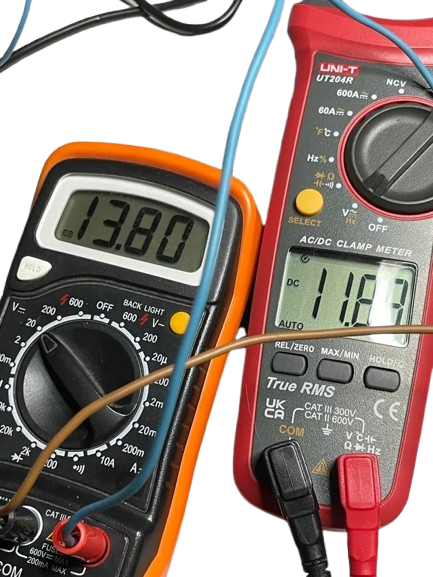
Working on appliances often necessitates the use of a multimeter. With a wide array available, the challenge lies in selecting the right one. Let’s explore the essential functions and features that will prove crucial:
- Continuity: This function checks for the presence of a complete path for current to flow.
- Ohms: This measures resistance.
- Volts AC: This measures AC Voltage.
- Volts DC: This measures DC Voltage.
- Capacitance: This measures the level of stored energy in an object, and we use this function primarily for capacitors. Measured in Microfarads.
- LoZ: This setting measures voltage, however, it applies a low impedance to the circuit. This reduces ghost voltage. (We’ll get into that later.)
- Temperature Probe: This comes in handy on multiple repairs, as you’ll see when we discuss ovens and dryers.
And another critical measurement that will work to make you a better technician is: Current (Amps).
Some meters are Amp Clamp meters, which will have the ability to measure current along with all the other features. Or you can buy a dedicated Ammeter.
- Gas oven igniters pull 3.2 to 3.6 amps. When they pull less, the safety valve won’t open.
- Checking amp draw on dryer motors can be critical to diagnosing them.
- Amp draw on some compressors is also an important diagnostic process.
As technicians, our goal is to arrive fully equipped and ready to conduct thorough tests as required. Inadequate testing tools expose us to the risk of errors, potentially impacting our revenue and reputation. Setting ourselves apart from the average DIYer, who might only test for volts and ohms, is our objective.
Interactive Module
Okay, now that we’ve blasted through the basics of the meter functions that you’ll be using, let’s ensure you’re familiar with what they are on a meter. Remember, different meters will have different features and functions, some offering certain features that other’s don’t. By and large, however, the symbols will all be the same.
In the module below, drag and drop the text to the appropriate setting on the meter.