
Inlet Valves
Inlet valves are what control the flow of water into the unit until we are ready for it. Some units will have just two valves, others can have a few more depending on the functionality of the unit in particular.
The control system alternates between hot and cold to achieve certain temperatures, and some valves have thermistors that the control system uses to get the correct temperature.
Common Failures
- Total valve failure. When energized with 120 VAC, the valve hums or does nothing. No water will enter the unit.
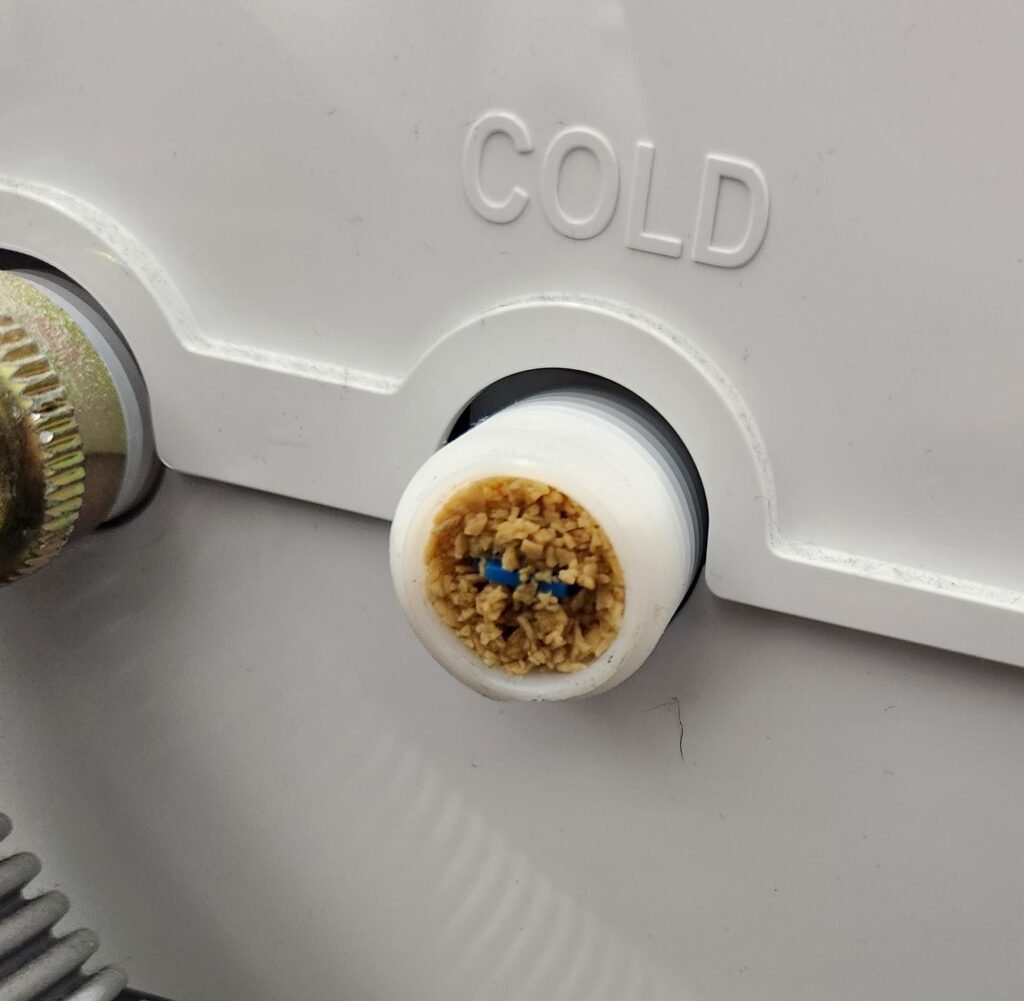
- Partial valve failure. When energized, the valve will not open all the way, or the screen will be clogged with sediment and debris in the lines.
- When you get a inlet filter screen clogged with debris, this debris can congest the internal workings of the solenoid plunger. You might get water flowing in when the valve should be shut.
- Water Hammer. Water hammer occurs when the valve shuts abruptly, and the pressure of the water supply shudders through the house. This is generally associated with the house water pressure to the unit. There are devices that the customer can have installed by a plumber to help mitigate this.
Testing Valves
When it comes to testing valves, you can check resistance across the valve solenoid to see if it’s grossly out of spec based on the expected resistance values. But remember, if it’s testing in spec, this does not indicate it’s good. If sediment clogs the solenoid plunger, this is a mechanical failure, not an electrical failure. The solenoid itself could show “in spec,” but sediment could be preventing the valve from opening or closing.
The best way to check valves are by energizing them and seeing what they’re doing. If they open, allow a strong flow of water in, then shut and stop water when you cancel it, then the valve is likely working fine. If you’re experiencing a code related to fill, but the valves are working, then you might consider looking at the pressure system.