
Drain Systems
The drain system includes all the components that are in the draining system – the filter, the drain pump, the drain tube.
Most drain pumps for washing machines are VAC loads. When energized, an impeller whirrs to life, and pushes the water out the drain tube and into the house plumbing.
Common Failures
- Electrical Failure. When energized with 120 VAC, the drain pump does nothing. You might read OL when checking Ω across the drain pump motor windings.
- Mechanical failure. When energized with 120 VAC, the drain pump might hum but will not pump the water out. Testing for resistance might show you the load in “in spec.”
- The windings on the motor might be seized.
- Debris might be caught in the impeller.
- Debris (socks, etc.) might be clogging the filter or the discharge from the tub to the drain pump.
Non-Pump Related Failures
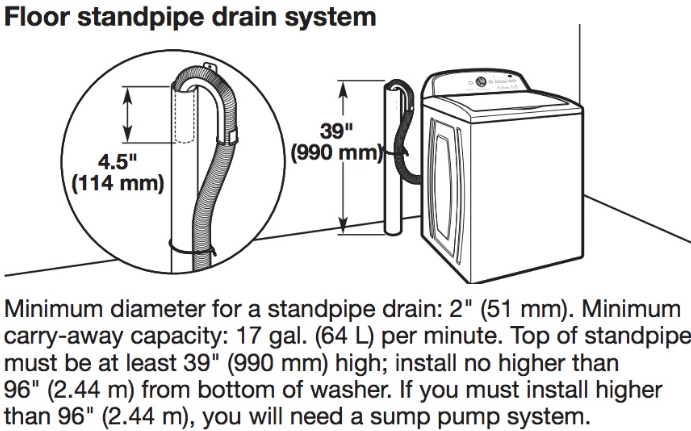
If the drain tube is too far down the standpipe and is submerged in water, you will siphon water back into the unit when the drain pump kicks off.
The drain tube itself needs an air gap. This is where air is allowed to enter into the tube when the drain pump kicks off.
Look at the diagram below. Also notice how the height of the loop on the drain line is above the tub of the washer? Washers operate by using gravity to assist with the draining. If the drain line is flat on the floor, the water is just going to pour out. You might see a fill code even though the
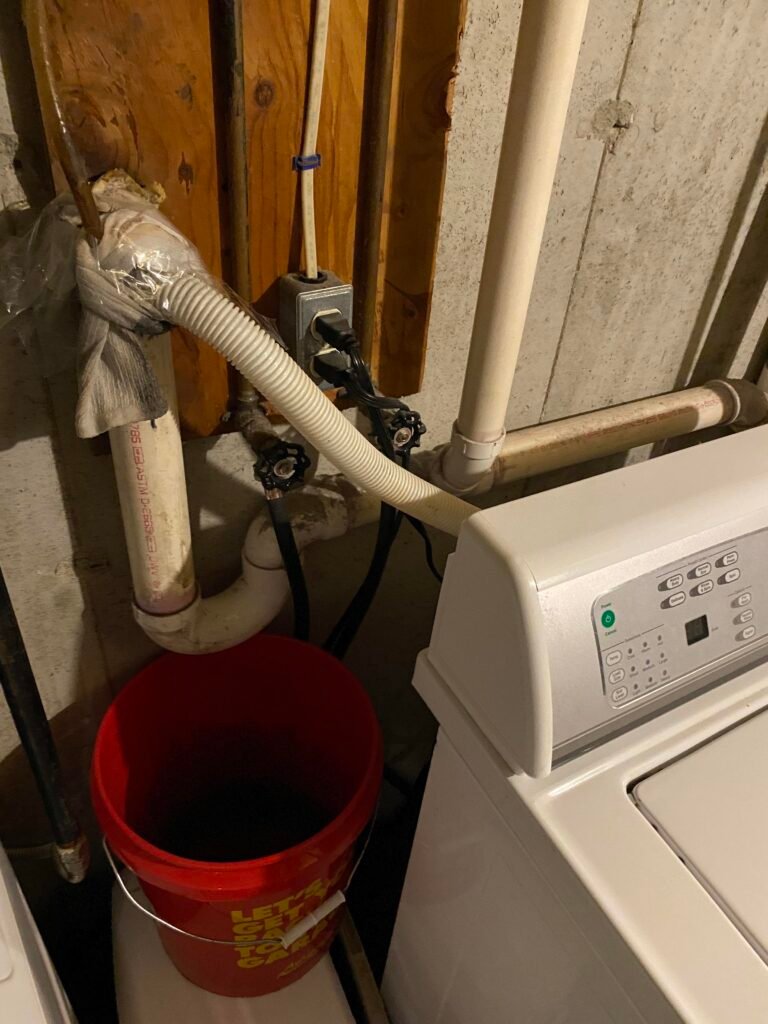
Notice how this drain line is installed? There is no air gap. It is completely closed off and secured. When the drain pump kicks off, the negative pressure will pull water from the house into the washer.
Mechanical Drain Pump Systems
In older top-load washing machines, the drain pump is mechanically driven by the washer’s main motor, eliminating the need for a separate electric pump. This design is less common in modern washers but was widely used in older machines.
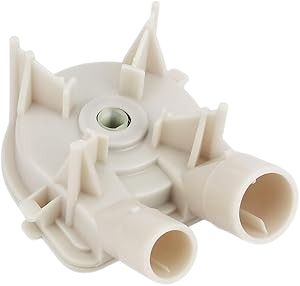
On this style, the motor has a shaft that connects to the coupler in the center. When the motor spins in the proper direction, it spins a plastic impeller inside the housing, which then pushes water out of the unit.
A very common failure state you will see with this style and the complaint of it not draining is that something got stuck in the impeller – like a small sock.
Since the drain pump is mechanically linked to the motor, it runs continuously when the motor operates. This means that during the spin cycle, the pump is active throughout, ensuring that water is expelled as it is wrung out of the clothes.