
Heating
While heating systems vary based on the age and the model of the unit, there are a few critical elements that you need to consider.
- Heat Source. The heat source is generally going to be your heating element. This will be a resistive load that uses 120 VAC to heat up.
- Optimal performance can also include ensuring hot water is entering the unit at the start. Some hot water heaters are far away from the dishwasher, and it can take a minute before hot water actually gets to the dishwasher. Run the sink until the water is hot before starting a cycle. The heating element will work less to get the temps to where they need to be.
- Safety Devices. When a heat source is introduced into an appliance, there needs to be safety devices to prevent melting or thermal events. These are typically going to be thermal fuses, or thermistors that determine temperature.
Diagnosing
When you’re out on a unit not heating, you need to determine whether the control source is sending voltage and if the heater is heating. You can generally do this by activating the diagnostic mode.
- If it is heating in diagnostics, then we know the heater is good. There is no need to disassemble and check for Ω. We would want to understand what the control is seeing to make it not activate the heater.
- Oftentimes, this is the temperature sensing device.
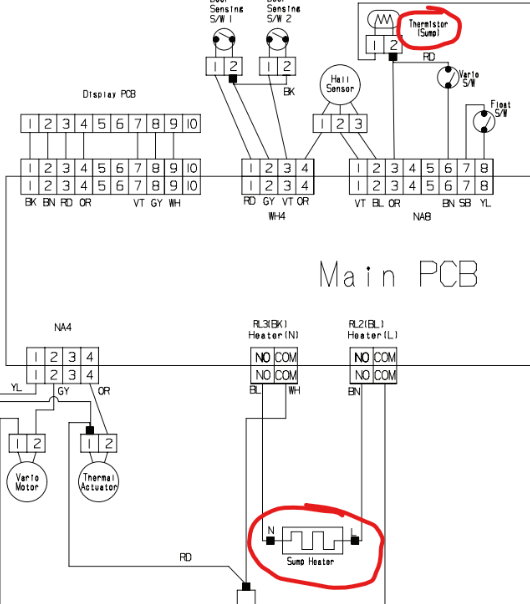
LG Dishwasher Heater
With this heater, there are no thermal fuses wired in the heater circuit. This configuration uses a Sump Heater, which means it’s in the sump.
Any heat source will need something for the board to tell it the temperature to prevent overheating.
We can also see a Thermistor (Sump) on the diagram. This is what will tell the board the temperature, and whether to kick on the heater, or leave it off.
Refer to the technical documentation for the unit you’re working on to understand testing methods.
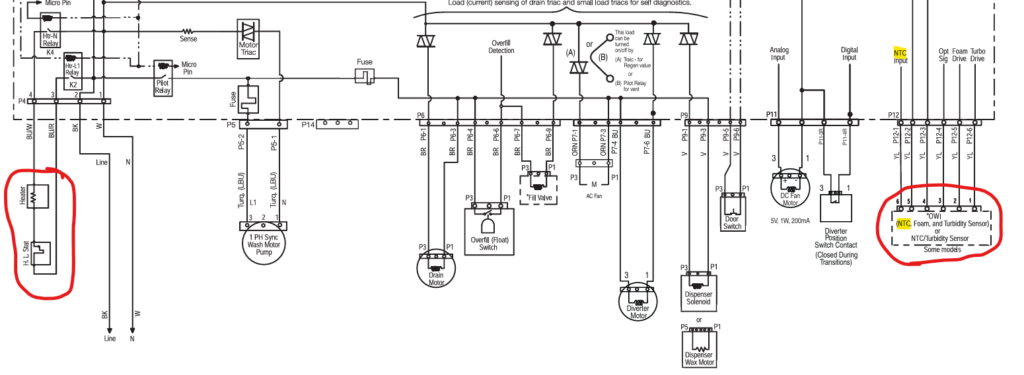
Whirlpool Dishwasher
Configuration:
- Heater Circuit (left). Has the heater and a hi-limit thermostat in series. The control closes 2 relays to energize the heater circuit.
- NTC (“Negative Temperature Coefficient” Thermistor). This thermistor shows the board what the temperature is inside the sump assembly.
- Logic. If heat is needed, the control looks to the thermistor.
- If the current temp is lower than the desired temp, the control energizes the heater until the desired temp achieved.
- If the current temp is above the desired temp (per what the thermistor is reporting), then the control will not energize the heater.
Cycle Selections
Not all cycles will call for heat. Ensure the customer is selecting a heated dry option to ensure the heater will be on at the end of the cycle.
Other Considerations
- Some models will not energize the heater if the water temperature is below a certain point. This is the logic in the board.
- If you have gunk buildup on the NTC (the Thermistor), then that will throw off the accuracy of the temperature device. This can cause inaccurate readings, and cycle issues.