
Triacs
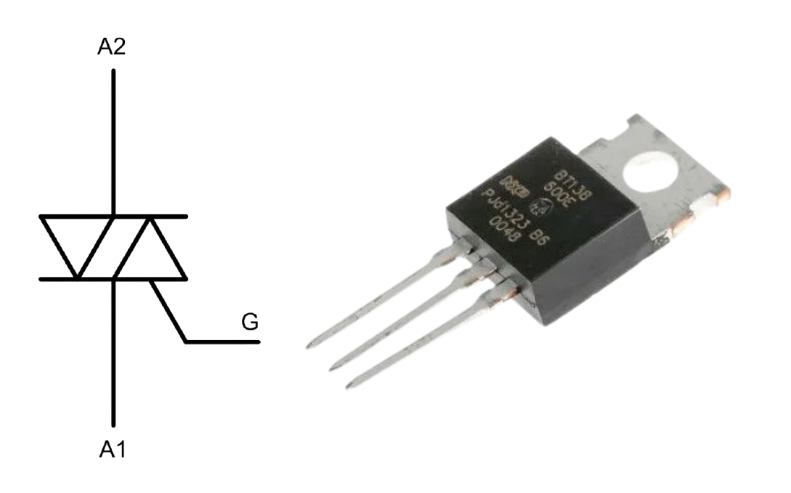
A triac (short for triode for alternating current) is a type of electronic switch that controls the flow of AC power. It’s like a light switch you can turn on and off with an electrical signal — but instead of flipping it by hand, a small control voltage does the job.
How a Triac Works (In Simple Terms)
Step 1: Control Signal
- A small signal (called a trigger) is sent to the triac’s gate.
- This “tells” the triac to turn on and start conducting electricity.
Step 2: Letting Current Through (AC)
- Once triggered, the triac lets current flow through it in both directions — perfect for AC power, which constantly changes direction.
- It stays on as long as there’s enough current flowing (called the holding current).
Step 3: Turns Off at Zero Crossing
- AC power naturally drops to zero 120 times a second (60 Hz systems).
- When the current drops below the holding current (usually right at this zero-crossing point), the triac automatically shuts off.
- It’ll stay off until the next time the gate is triggered.
Triac Limitations
Triacs work great with simple, resistive loads (like incandescent bulbs or heaters). But they don’t play well with:
- Very low-current devices (like LED bulbs)
- Devices with complex power supplies
- Highly inductive or capacitive loads
In those cases, the triac may not switch properly and can even get damaged.
Microwaves with Triacs for Light Bulbs
I see this all too often. The halogen bulb on the microwave goes out. Tech or customer replaces it with a LED bulb. It works, then fails very fast, or never works. They put a new correct original light back in, and it’s still not working. Voltage checks show something not close to where it should be.
Microwaves that use triacs to control an incandescent light bulb are relying on how AC current and load characteristics interact with the triac’s switching behavior.
A triac turns on when triggered (usually by a control signal) and stays on as long as there’s enough current flowing through it (called holding current).
Why Incandescent Works Fine:
- Incandescent bulbs are resistive loads.
- When powered, they draw a steady current, which is more than enough to keep the triac on until the AC waveform naturally reaches zero.
Why LED Bulbs Can Be a Problem:
LED bulbs typically have internal switch-mode power supplies, and:
- They are often non-resistive (non-linear) loads.
- They may have a capacitive or inductive input stage, which can mess with the triac’s behavior.
- Most crucially: they draw very little current.
What Can Go Wrong:
- Insufficient Holding Current: The LED doesn’t draw enough current to keep the triac conducting → triac turns off too early → bulb flickers or doesn’t light at all.
- Voltage Spikes: If the triac tries to turn off but there’s a capacitive load, the sudden drop can cause voltage spikes or unreliable switching.
- Premature Triac Failure: These abnormal switching events can stress or overheat the triac, causing premature failure.
How This Applies To Triacs In Any Application
Regardless the application, triacs work the same. When you have a loose connection or a failed or failing load, the triac might not operate properly. It will not fully open, and you might see obscure voltage readings. On a 120 VAC load, you might see 20-80 VAC, assume the board is bad, replace it and see the same thing.