
How to Become an Appliance Repair Technician
A practical path for complete beginners who want to learn the trade, build real diagnostic skill, and become more valuable in the field.
If you want to know how to become an appliance technician, the goal is not just learning how to take machines apart. The real value comes from understanding how appliances work, how to test them, and how to diagnose problems efficiently. This guide walks through the path, tools, training, and next steps.
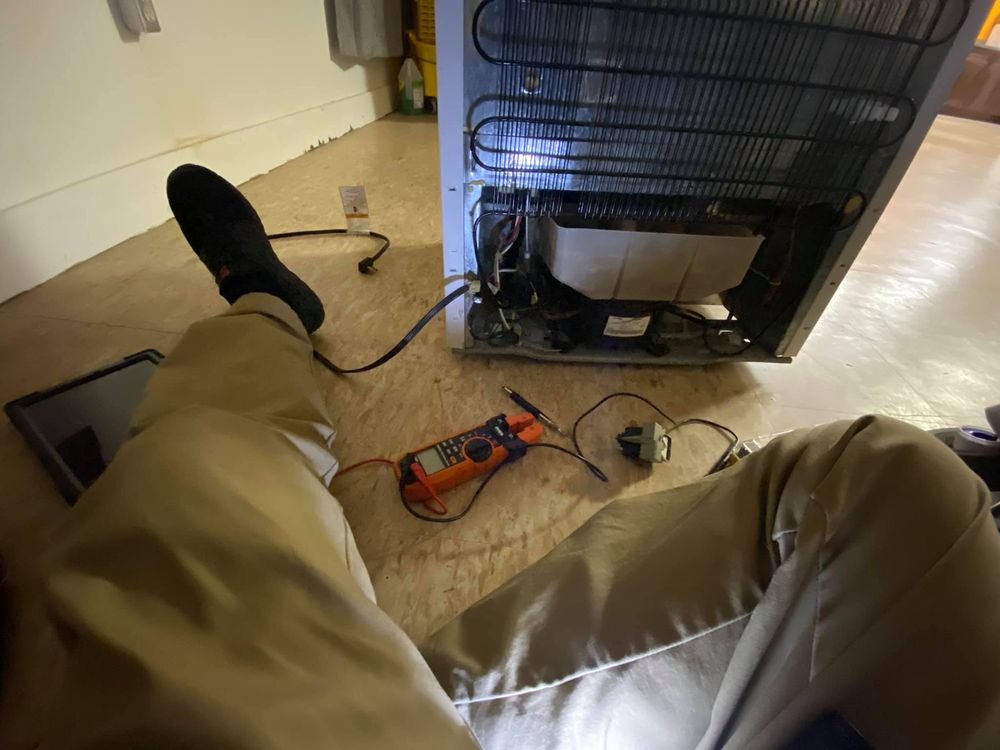
Is Appliance Repair a Good Fit for You?
Appliance repair can be a strong option for people who like solving problems, working with their hands, and building a skill that has practical value. You do not need to be a math genius, but you do need curiosity, patience, and a willingness to learn how systems work.
Mechanical Curiosity
If you naturally want to know how things work and why they fail, that helps a lot.
Comfort With Learning
The technicians who grow fastest are usually the ones willing to learn theory, not just replace parts.
A Practical Mindset
This trade rewards people who can observe symptoms, think logically, and test their assumptions.
How Much Does an Appliance Technician Make?
Income depends on your location, skill level, efficiency, and whether you work for a company or for yourself. The big takeaway is that stronger diagnostic skill often leads to better efficiency, fewer callbacks, and more value in the field.
Working for a Company
Entry-level technicians often start lower and improve as they become more efficient and capable.
- Entry level: roughly $45,000 – $55,000+
- More experienced techs: $65,000 – $90,000+
- Pay may be hourly, commission-based, or hybrid
Working for Yourself
Higher upside, but also more responsibility and risk.
- Solo operators can do very well
- Revenue depends heavily on your market and efficiency
- Business ownership adds marketing, customer service, and operations
The Efficiency Angle
The better you get at diagnostics, the more efficiently you can handle calls. That matters because time wasted on bad assumptions, unnecessary tear-downs, and wrong parts eats into both income and reputation.
Do You Need a License to Repair Appliances?
In many cases, no specific appliance repair license is required. But there are important exceptions and related certifications you should know about.
- EPA 608: required if you will handle refrigerant or work on sealed systems in ways that require it.
- State and local rules: some states or local areas may have registration or licensing rules tied to installation or related work.
- Honest wording matters: if your state does not issue a license for this trade, do not market yourself as licensed when you are not.
What Kind of Training Actually Helps?
Hands-on experience matters, but hands-on experience alone is usually not enough. Modern appliance repair is heavily diagnostic. That means electrical testing, schematic reading, and understanding how the machine should operate.
A strong beginner path is to learn the fundamentals first, then apply them to real appliances and real failure logic. That is what helps you move beyond guesswork.
| Training focus | Weaker approach | Stronger approach |
|---|---|---|
| Learning style | Just disassembly and parts swapping | Diagnostics, schematics, and theory of operation |
| Goal | Get through the repair | Understand why the failure occurred |
| Result | More guesswork and callbacks | Better testing logic and stronger field confidence |
Best next step for beginners
If you want a structured path, start with a training program that teaches the fundamentals, then repeatedly applies them across actual appliance diagnostics. That gives you a better foundation than just memorizing common failures.
What Tools Do You Need to Start?
You do not need an expensive truck full of tools to get started. For many beginner-level situations, a small set of solid essentials will cover a lot.
Multimeter
One of the most important tools in the trade. You need to be comfortable using it well.
Basic Hand Tools
11-in-1 driver, nut drivers, screwdrivers, and a putty knife will take you a long way.
Diagnostic Mindset
This matters more than owning a huge pile of tools early on.
A Simple 5-Step Roadmap
1. Learn the Fundamentals
Start with electrical theory, multimeter basics, and understanding how appliance circuits work.
2. Get Structured Training
Use a program that teaches diagnostics, schematics, and appliance operation in a clear sequence.
3. Practice on Real Machines
Use low-risk machines, junk units, or flip opportunities to apply what you learned in a real setting.
4. Add Related Certifications if Needed
EPA 608 can be worthwhile if you plan to expand into sealed-system-related work.
5. Start Taking the Next Step
That may mean applying to companies, doing side work carefully, or gradually building toward a business.
The Key
The point is not just getting started. It is learning the craft in a way that makes you better and more reliable over time.
Common Questions
How long does it take to learn appliance repair?
You can learn the fundamentals relatively quickly with structured training, but real proficiency builds through practice and real-world application.
Do I need a license?
Often no, but you should always check your local rules and understand where EPA 608 applies.
Is appliance repair a good career?
It can be a strong path for people who like problem-solving, hands-on work, and building a skill that has practical demand.
What should I do first?
Start by learning the fundamentals of diagnostics and electrical testing rather than jumping straight into random repairs.
Ready to Learn the Trade the Right Way?
If you are serious about becoming an appliance technician, focus on building real diagnostic skill from the beginning. That is what helps you get faster, make better calls, and become more valuable over time.
