
Professional Appliance Repair Training
Learn Dishwasher Repair:
Master The Wash Logic
From “Not Draining” to “Poor Wash Quality.” If you want to learn dishwasher repair correctly, you need to understand the hydro-dynamics of the machine. Learn to diagnose circulation pumps, diverter valves, turbidity sensors, and heating circuits with confidence.
Start This Course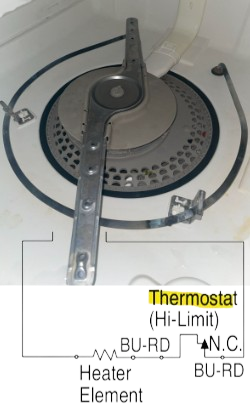
More Than Just A Pump
Modern dishwashers are smart. They sense soil levels and divert water flow. To safely learn dishwasher repair, you must distinguish between a bad motor, a sensor error, or a logic failure on the board.
Poor Wash Quality
Is the customer loading it wrong, or is the circulation pump failing? We teach you how to listen for “cavitation” and check for sheared impellers—a common failure where the motor runs but moves no water.
Not Draining
The classic failure. We teach you to identify if the issue is a physical blockage in the check valve, a failed drain solenoid, or a dead board output. Never replace a pump when the issue is a $5 piston valve.
Heating & Drying
Heating failures leave dishes wet and dirty. We teach you how to verify heater continuity and troubleshoot the safety chain—thermostats, TCOs, and relays—that protects the unit from melting down.
The Heart of the Machine
The Circulation Pump
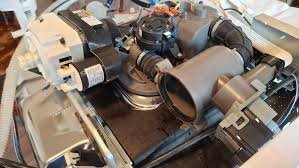
If water isn’t moving, dishes aren’t cleaning. We break down how to test standard capacitor-start motors versus modern variable speed inverter pumps (BLDC) found in Bosch and high-end GE models.
We teach you how to identify a “stuck” motor vs a “dead” motor, and how to verify if the diverter valve is correctly sending water to the top rack or the bottom rack.
- ✓ Testing Run Capacitors
- ✓ Diverter Motor Positioning
- ✓ Verifying Water Fill Levels
Smart Sensing
Turbidity & Venting
Modern units use optical sensors (Turbidity Sensors) to “see” how dirty the water is by measuring light refraction. When you learn dishwasher repair with us, we teach you how these inputs change the cycle time and how to test if the “Smart Wash” logic is functioning.
You will also learn about active venting systems, including wax motors and fan-assisted drying, to solve those “my dishes are still wet” complaints.
View The Syllabus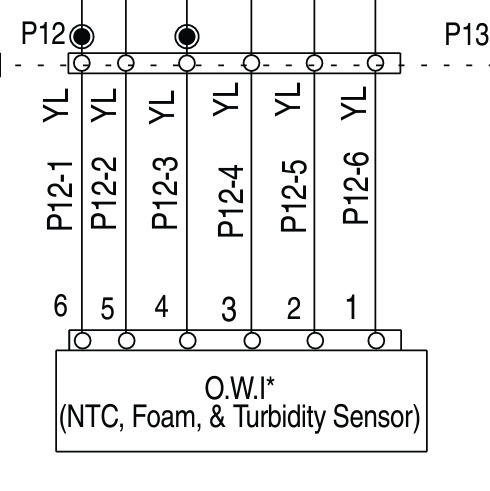
See The Training In Action
Supplement your coursework with deep technical dives. Check out our free resources for diagnostic examples and theory.
Diagnostic Videos
Watch step-by-step troubleshooting guides, live multimeter testing, and component teardowns.
100% Positive Rating
Viewer approved help
Tech Podcast
Deep dives into the science of repair. We break down electrical circuits, schematics, and error codes.
“Amazing info! Thank you for the hard work”
— Jp Rivera, Listener
Start Your Journey
Choose Your Training Path
The Dishwasher Repair module is included in our Certified Professional bundle.
Fundamentals
Perfect for beginners. Learn electrical theory, multimeter usage, and the core “Theory of Operation” for major appliances.
- ✓ Electrical Theory Basics
- ✓ Multimeter Training
- ✓ Self-Paced Access
Certified Professional
Master diagnostics, schematics, and business skills. Includes the Dishwasher Module and certification.
- ✓ All Repair Modules (Dishwasher Included)
- ✓ Microwave Course Included (Free)
- ✓ 1-on-1 Mentorship Sessions
- ✓ ATA Official Certification
Microwave Specialist
Add high-voltage microwave diagnostics to your skillset. Safe discharge procedures and magnetron testing.
- ✓ High Voltage Safety
- ✓ Magnetron Diagnostics
- ✓ Door Interlock Switches