
Door Locks vs. Switches
Older units generally use lid switches, which opens or closes a particular circuit depending on if the lid is opened or closed.
Newer units generally use locking mechanisms, which prevent the lid or door from opening once a cycle is started.
Door Lock Systems
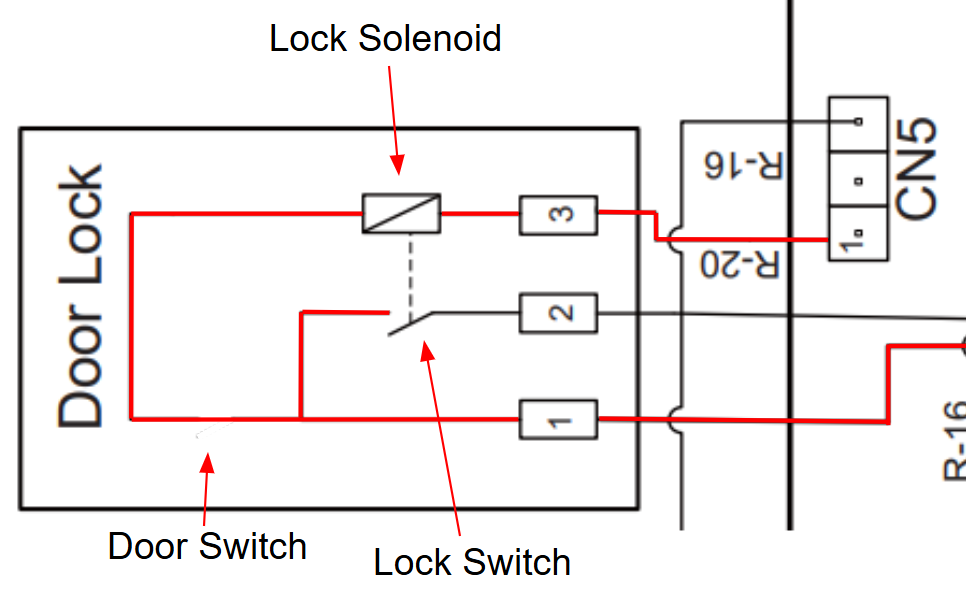
For lock systems, you’re generally going to see at least 3 components in the circuit.
- The Door Switch. This opens or closes the circuit to the lock solenoid depending on if the lid is opened or closed. If the lid is opened, the solenoid will not receive 120 VAC to engage.
- The Lock Solenoid. This is what shoots out a plunger to secure the door shut.
- The Lock Switch. This is the switch that engages when the lock solenoid is engaged properly, and let’s the board know the lid is secure.
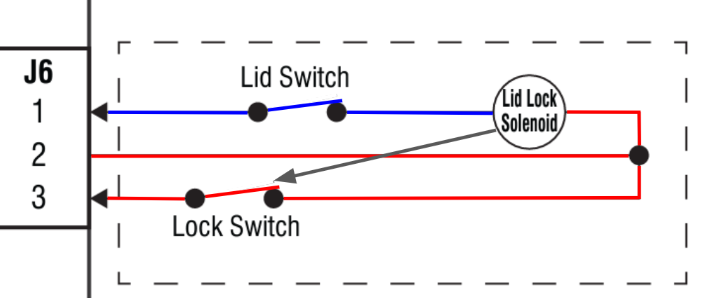
Older Units with Lid Switch
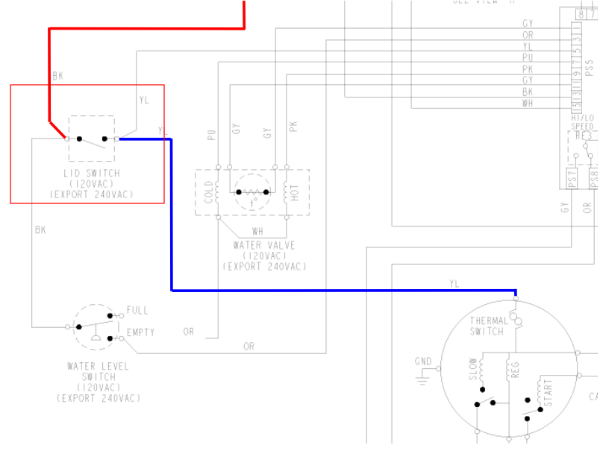
On older units, the lid can be opened at any point in the cycle. You will need to review the wiring diagram to know what will happen if the lid is opened at a certain portion of the spin. In the instance below, we can see the lid switch supplies line voltage to the motor. If the lid is opened, the motor will not have a complete circuit.
But we can also see, regardless of the lid switch position, the unit will fill with water. So, if the unit fills but does not agitate or spin, the lid switch would be a good starting point.
To learn more, review the coursework in the training program.