
Professional Appliance Repair Training
Learn Washer Repair:
Master The Wash Cycle
From classic Direct Drives to modern VMWs. If you want to learn washer repair professionally, you must understand the diagnostics behind shift actuators, lid locks, frequency drives, and drain systems.
Start This Course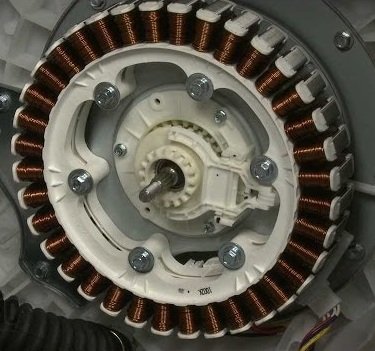
It’s Not Just The Pump
Washing machines are complex sequences of Fill, Agitate, Drain, and Spin. To safely learn washer repair, you must understand how to identify exactly where the cycle fails before you touch a screwdriver.
Washer Not Draining
The #1 service call. Is it a blocked pump, a bad impeller, or a control board not sending voltage? Learn to test the drain circuit confidently and check for foreign objects (like socks) in the sump.
Not Spinning / Agitating
Modern washers use “Shift Actuators” and optical sensors to change modes. We explain how to diagnose these tricky VMW components and verify if the transmission or the “Splutch” is to blame.
Lid Lock Errors
We teach you to test Lid Locks using schematics so you can confidently know if it’s faulty. Once you understand the circuit, you can apply that knowledge to safely bypass them for testing purposes.
Mechanical Theory
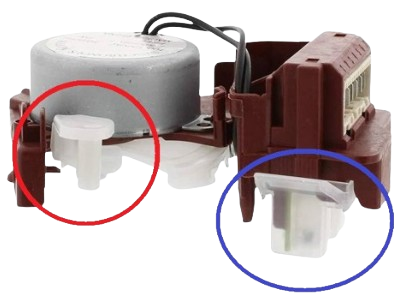
The Shift Actuator
On modern Vertical Modular Washers (VMW), a small motor physically shifts the gearcase from “Agitate” to “Spin.” This is the most common failure point in new units. We show you exactly how the optical sensor inside it works to read the basket speed.
If you want to learn washer repair, you must understand the “Splutch” mechanism. We teach you how to check the cam ring alignment and ensure the transmission is engaging the basket drive properly.
- ✓ Testing the Optical Tachometer
- ✓ Splutch & Cam Ring Alignment
- ✓ Reading Error Codes
Electrical Control
Pressure Transducers
Gone are the days of simple air tubes. Modern washers use frequency-based pressure transducers to measure water levels to the millimeter.
Warning: If you try to test these like an old machine by blowing into the tube, you will destroy the sensor. We teach you how to measure the frequency (Hz) signal to verify the water level safely and correctly.
View The Syllabus
See The Training In Action
Supplement your coursework with deep technical dives. Check out our free resources for diagnostic examples and theory.
Diagnostic Videos
Watch step-by-step troubleshooting guides, live multimeter testing, and component teardowns.
100% Positive Rating
Viewer approved help
Tech Podcast
Deep dives into the science of repair. We break down electrical circuits, schematics, and error codes.
“Amazing info! Thank you for the hard work”
— Jp Rivera, Listener
Start Your Journey
Choose Your Training Path
Whether you are just curious or ready to launch a career, we have a path for you.
Fundamentals
Perfect for beginners. Learn electrical theory, multimeter usage, and the core “Theory of Operation” for major appliances.
- ✓ Electrical Theory Basics
- ✓ Multimeter Training
- ✓ Self-Paced Access
Certified Professional
The complete career path. Master diagnostics, schematics, and business skills. Includes certification and mentorship.
- ✓ All Repair Modules (Washer, Dryer, etc.)
- ✓ Microwave Course Included (Free)
- ✓ 1-on-1 Mentorship Sessions
- ✓ ATA Official Certification
Microwave Specialist
Already a tech? Add high-voltage microwave diagnostics to your skillset. Safe discharge procedures and magnetron testing.
- ✓ High Voltage Safety
- ✓ Magnetron Diagnostics
- ✓ Door Interlock Switches