
Outlet Voltage
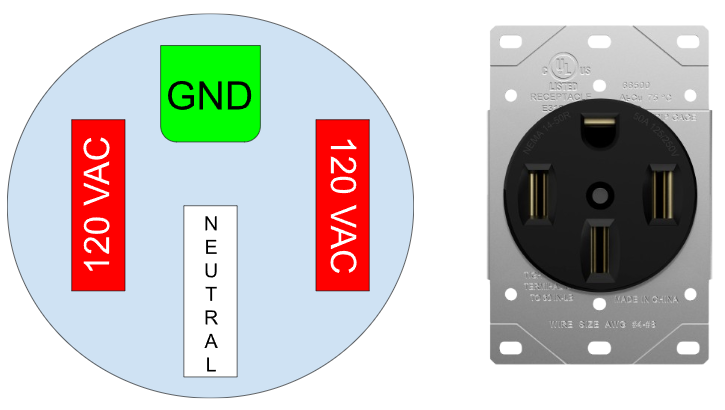
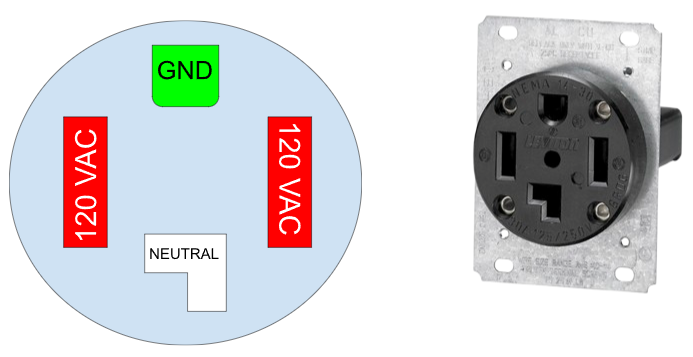
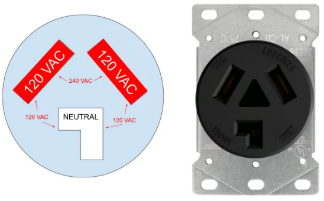
Not much talking in this one. We’ll just add the pictures of what voltages you should see on the various outlets you’re going to see.
Oven Outlets
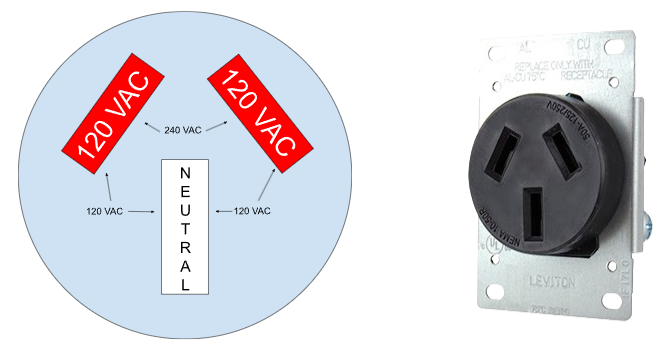
Dryer Outlets
Standard 120 VAC Outlets
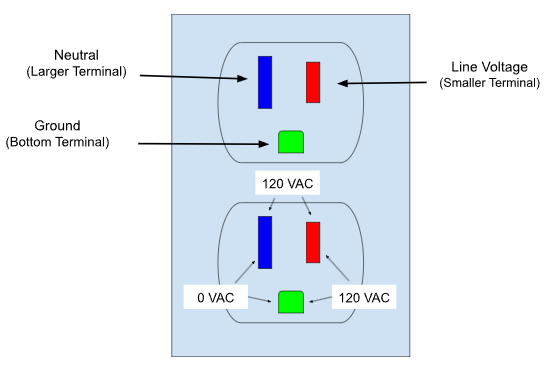
The smaller terminal is the Line voltage.
The larger terminal is the Neutral connection.
The circular one at the bottom is Ground.
GFCI Outlets
“GFCI” stands for Ground Fault Circuit Interrupter. It’s a special type of outlet or breaker that protects people from electrical shock. It constantly monitors the electricity flowing through a circuit and shuts it off in milliseconds if it detects something unsafe — like electricity flowing through you instead of back through the wire.
A GFCI watches the current going out on the hot wire and the current coming back on the neutral wire. There is a control board in the outlet that has a logic process, and it’s always monitoring the current.
Under normal conditions:
- What goes out = What comes back.
If there’s a difference, even a tiny one (like 5 milliamps), that means some current is going somewhere else — like leaking to ground through a person, water, or a damaged wire.
When that happens, the GFCI trips and cuts the power immediately (usually in under 1/40th of a second!).
GFCIs are generally required where wet conditions are – such as in kitchens and bathrooms.